How To: lighting
Not all lighting is the same, and each room may have slightly different requirements. Think about the difference in lighting needs between a cozy bedroom and a home office. This blog post gives you an overview of some of the main considerations when selecting lighting.
sources of light
Natural light is, of course, any light created by the sun. Natural light can help reduce stress, promote healthier sleep, and improve your mood. I frequently enter homes and see all of the windows blocked by blackout shades or blinds, all day long. Open those babies up! If you’re worried about privacy, opt for window treatments that let natural light flow into the space while blocking the view into your home. Or, perhaps, layer your drapery utilizing sheer drapes or shades during the day, alongside a heavier option for nighttime.
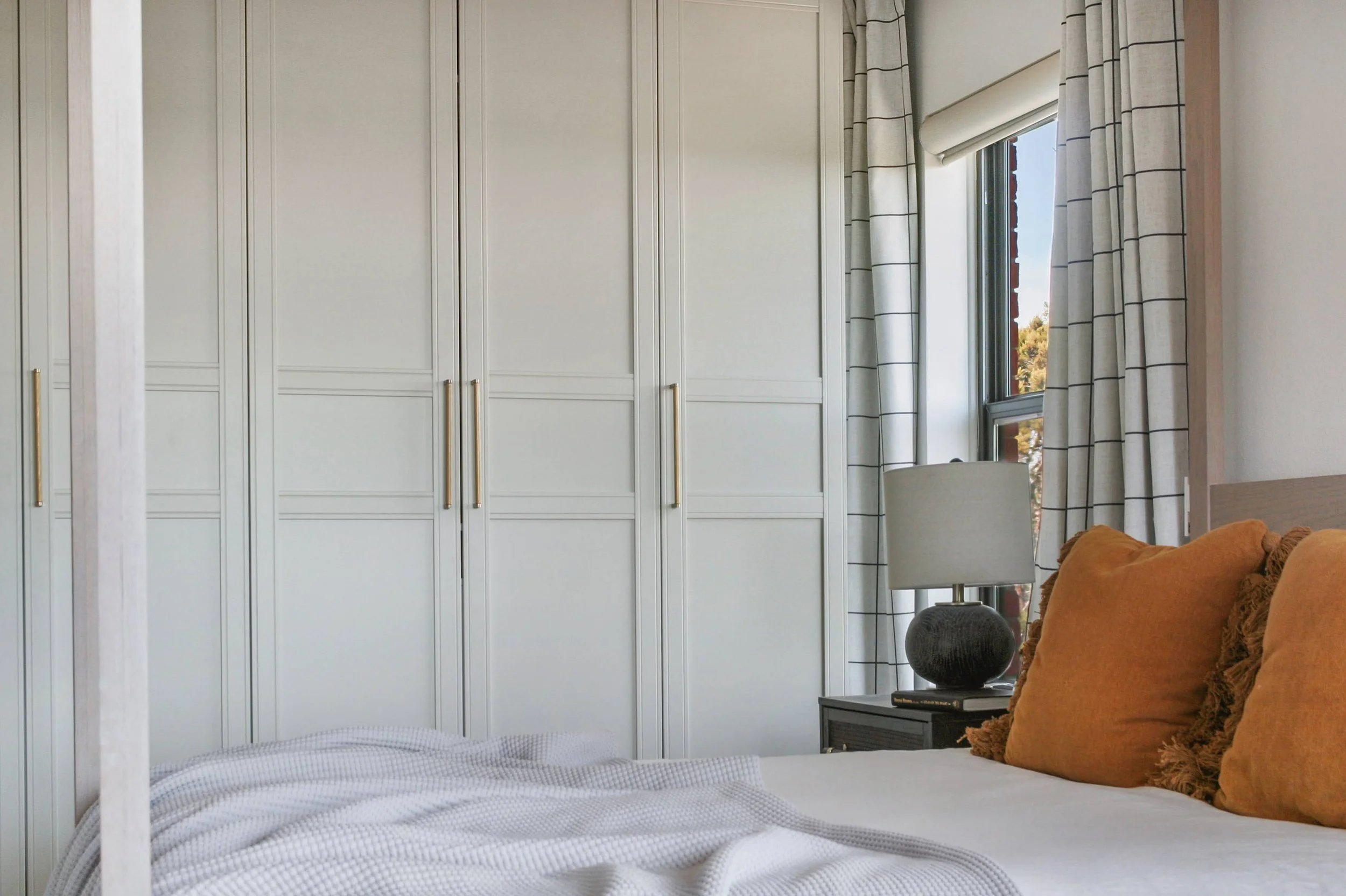
We have a combo of light-filtering roller shades and blackout curtains in our bedroom.
Natural light can be incorporated into interior spaces through windows, skylights, and glass doors. As the location of the sun’s rays moves throughout the day, changing patterns of natural light move throughout the space. I absolutely love seeing how the light changes throughout the day in my home. Window treatments can help control the amount of natural light as it changes, if needed. Natural lighting is such a great source of lighting during the day, especially when it’s sunny out. However, it’s important to account for the lighting needed in your space on a less-than-ideal weather day when it’s stormy or gray out.
Artificial lighting includes ambient lighting, task lighting, accent lighting, and decorative lighting.
Ambient lighting is soft, diffused light that uniformly fills a room. It is the primary source of artificial light in a space. These are often ceiling-mounted fixtures such as chandeliers or recessed lighting. I’m a big proponent of your ambient lighting being on a dimmer switch so you can control the light levels throughout the day to meet your functional needs as well as set the mood you’re looking for. For example, I have dimmers on all overhead lighting in my living room. When I’m cleaning, they’re all on full blast so I can spot dust and dirt. When I’m reading, I increase the lighting on my recessed lighting directly over my special sofa spot, but I leave off the chandelier. When I’m having friends over to chat, I turn on my dim sconces, lamp lighting, and use my chandelier on its lowest setting.
Ambient lighting usually has a warm tone and often influences the color in the room. The amount of light in a space can greatly impact paint colors as well as the overall perception of the space. If you’ll be changing both your lighting and your wall color, I recommend getting your lighting squared away first. For example, a gray living room may appear almost white when naturally lit during the day, but take on a greige (warm) or purplish (cool) hue in the evening, based on light bulb temperature. Light temperature is measured in Kelvin (K). Warm light bulbs (2700–3000K) cast a yellowish glow, while cool light bulbs (5000–6500K) have a bluish undertone. I basically only use 2700-3000K for every fixture. Please, if you take one thing away from this, swap your light bulbs out for 2700-3000k throughout your entire home.
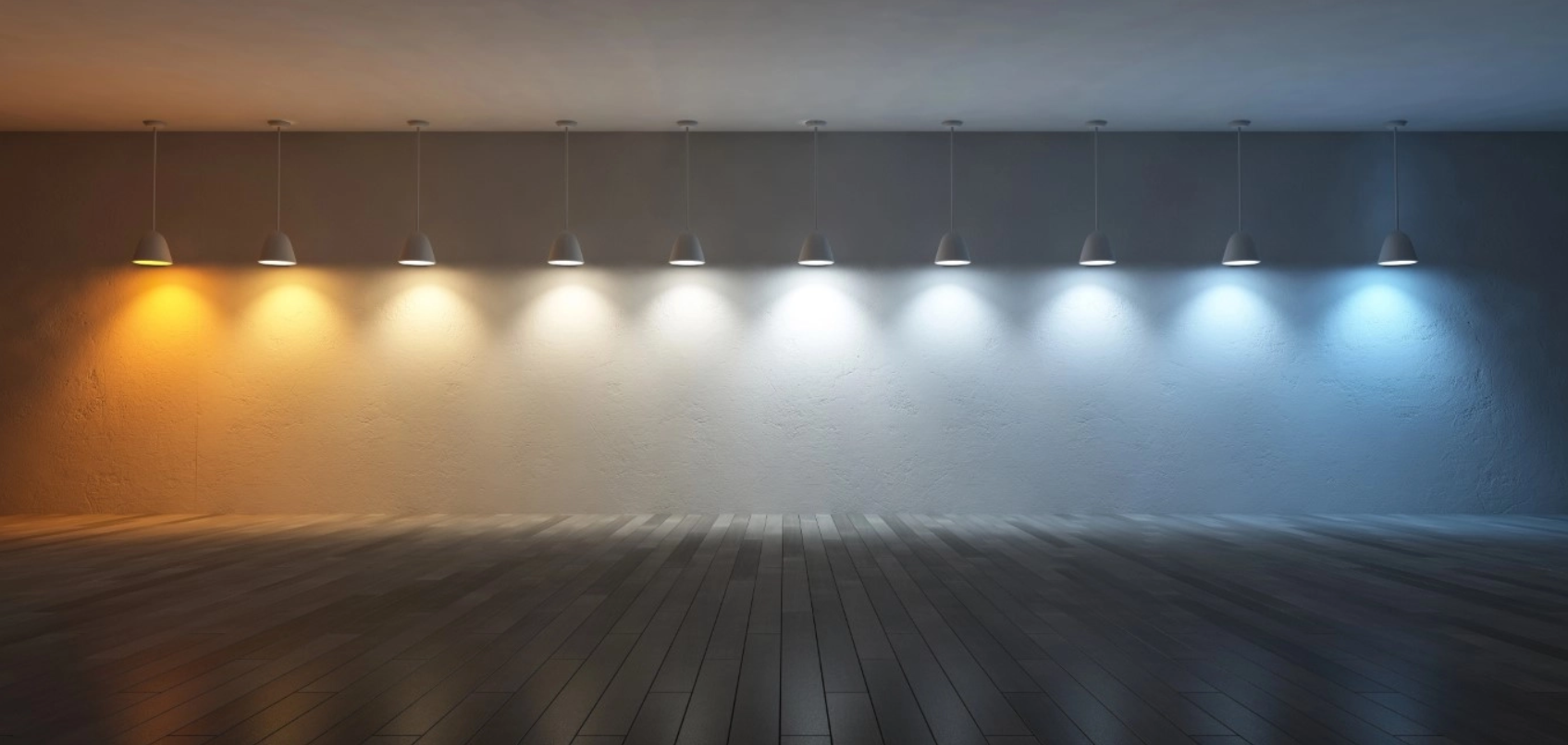
This photo depicts the differences in light temperature and how they impact color within your space.
Task lighting is used to illuminate areas used for specific tasks, such as cooking, working, or reading. Table lamps, desk lamps, floor lamps, pendant lights, and under-cabinet lights are all types of task lighting.
Accent lighting is another type of focalized lighting and is used to draw attention to objects or architectural features of the home. This includes spotlights, track lighting, picture lighting above artwork, etc. Inner-cabinet lighting is also a form of accent lighting used to call attention to items on display.
Decorative lighting is more for aesthetics than functionality and can include any of the artificial lighting examples above.
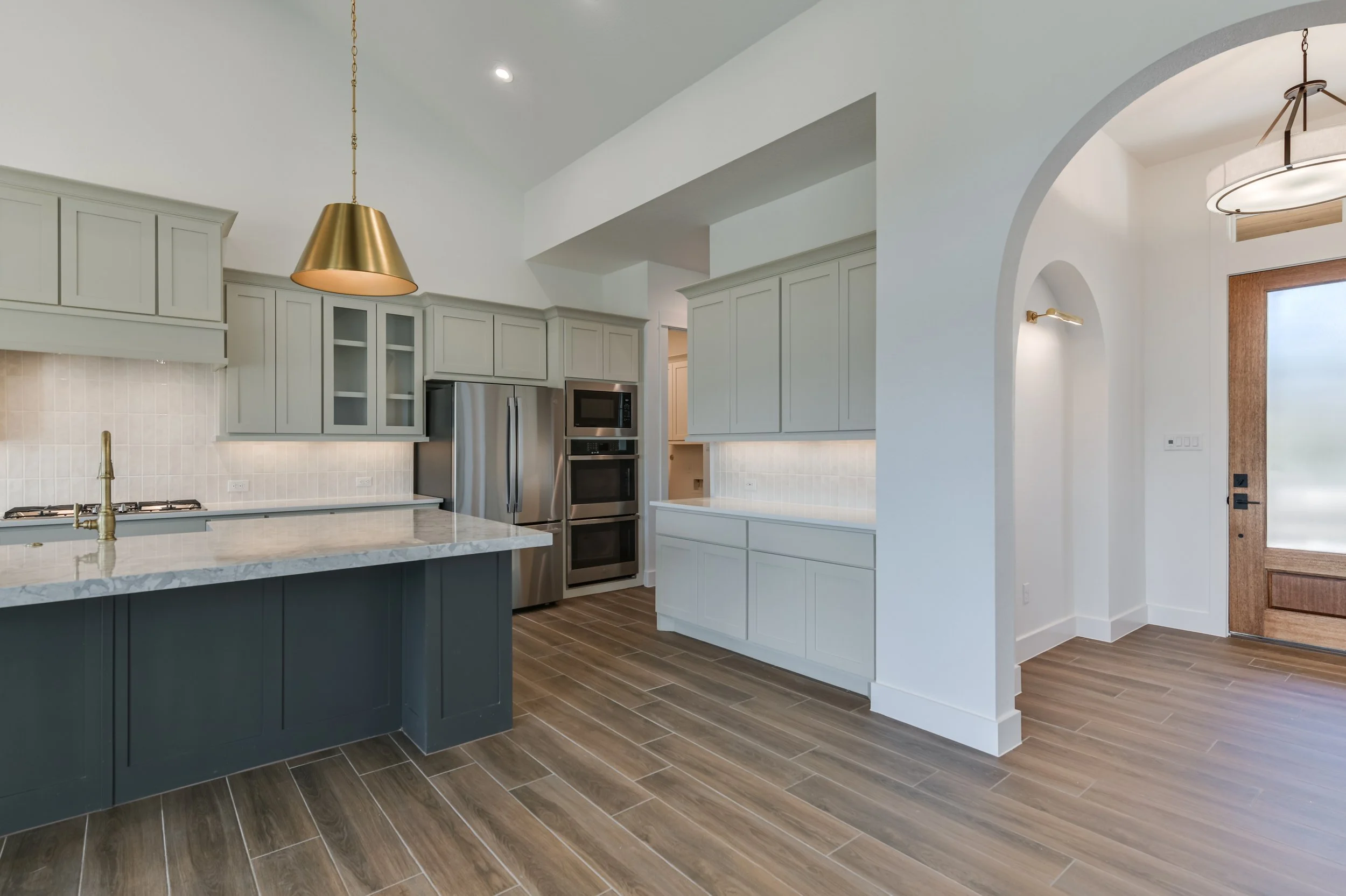
Bathroom I designed for Bennett Design Build in Spring Branch, Texas.
lighting terms
Here are a few lighting terms you may see when shopping, and what they each mean.
Kelvin: Light temperature or warmth, discussed above. Just putting it here again so I have one more place to advocate for 2700-3000 K bulbs.
Lumen: A unit for measuring the total amount of visible light emitted. This can also be referred to as output or brightness. The higher the lumen, the more light a fixture emits.
Watt: The amount of energy a light bulb uses.
Efficacy: How efficiently a light converts electrical energy to lumens. Sometimes referred to as Lumens Per Watt (LPW).
Volt: The amount of electrical pressure in the power line. Higher voltage = more electricity flowing to the lighting source.
Line Voltage: Standard voltage entering your home, 120 volts.
Low Voltage: By using a transformer, less energy is used to create light. 120 volts is reduced to 12 volts.
calculating artificial lighting
Have you ever walked into a room and noticed immediately that the space feels very dark? Rooms with poor lighting can have a negative effect on your mood. They are also not conducive to a productive work environment in the kitchen or home office. Trying to work or read a recipe in less-than-ideal lighting could lead to eye strain, headache, and fatigue, and trying to chop vegetables in a dark environment could pose a safety issue.
Here’s an easy calculation to determine how much lighting you need in your space:
Step 1: Calculate the area of the room (length x width).
Step 2: Multiply the area x 1.5 to determine the wattage needed for ambient lighting.
Certain overall light levels are recommended for specific interior rooms, so this isn’t necessarily a fool-proof calculator, but it will help you get to a sufficient level of lighting for your space. These levels should be used as a guide and need to be adjusted to meet the specific requirements of the space, as well as the amount of natural light the room receives.
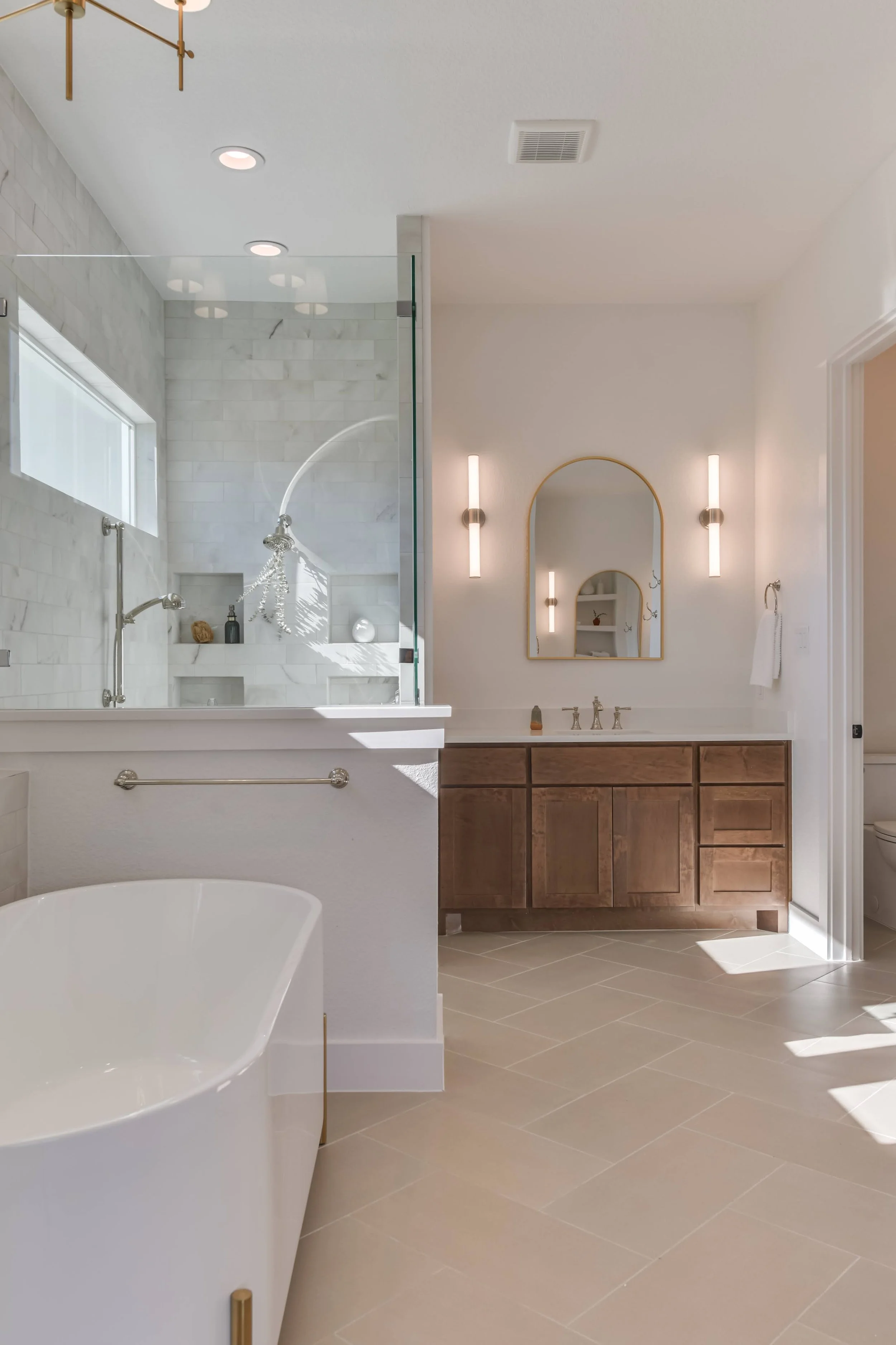
Bathroom I designed for Bennett Design Build in Spring Branch, Texas.
Here’s an example of how I’d use that calculator. Say I’m working on a kitchen that’s 13 feet by 12 feet. That would mean the area of the room (13 x 12) is 156 square feet. I take that square footage and multiply it by 1.5, which gives me 234 watts needed for ambient lighting in the kitchen. Let’s say I find a light fixture I love and I want to incorporate it into my kitchen. It accommodates three 60W equivalent bulbs. 60 x 3 = 180 watts. That means I need about 54 more watts in my ambient lighting to get up to the recommended 234 watts. I already have 5 recessed lights in the space that need to be replaced, and I found some new ones that are 8 watts each (8 x 5 = 40 watts). Now, I have about 14 watts left to meet the recommended wattage for the space. I have ample natural lighting in the space, so I’m not too worried about adding more overhead ambient lighting, but I have decided I need a bit more task lighting above the sink because I wash dishes at night, and the area tends to be darker as it’s flanked by upper cabinetry. I found a 14-watt pendant light for above the sink, which has a frosted glass globe and will provide both ambient lighting as well as task lighting for washing dishes.
While you might be inclined to run out and change your light bulbs with a higher wattage, many fixtures have a maximum wattage allotment. These levels are predetermined, so be careful about changing out your bulbs with a higher wattage.
LED lighting
I prefer LED (light-emitting diodes) lighting over other light sources for several reasons.
Safety: LEDs produce very little heat, making them a safe source of lighting from a fire perspective.
Energy and Cost Efficiency: LEDs are more expensive than incandescent light bulbs up front, but they can last 30 times longer. They are also the most energy-efficient light source. According to Energy.gov, "Lighting accounts for around 15% of an average home's electricity use, and the average household saves about $225 in energy costs per year by using LED lighting."
Performance: LEDs can produce light that is brighter than incandescent lamps. They can also produce light in many colors. Some LEDs are dimmable and/or have daylight or motion sensors.
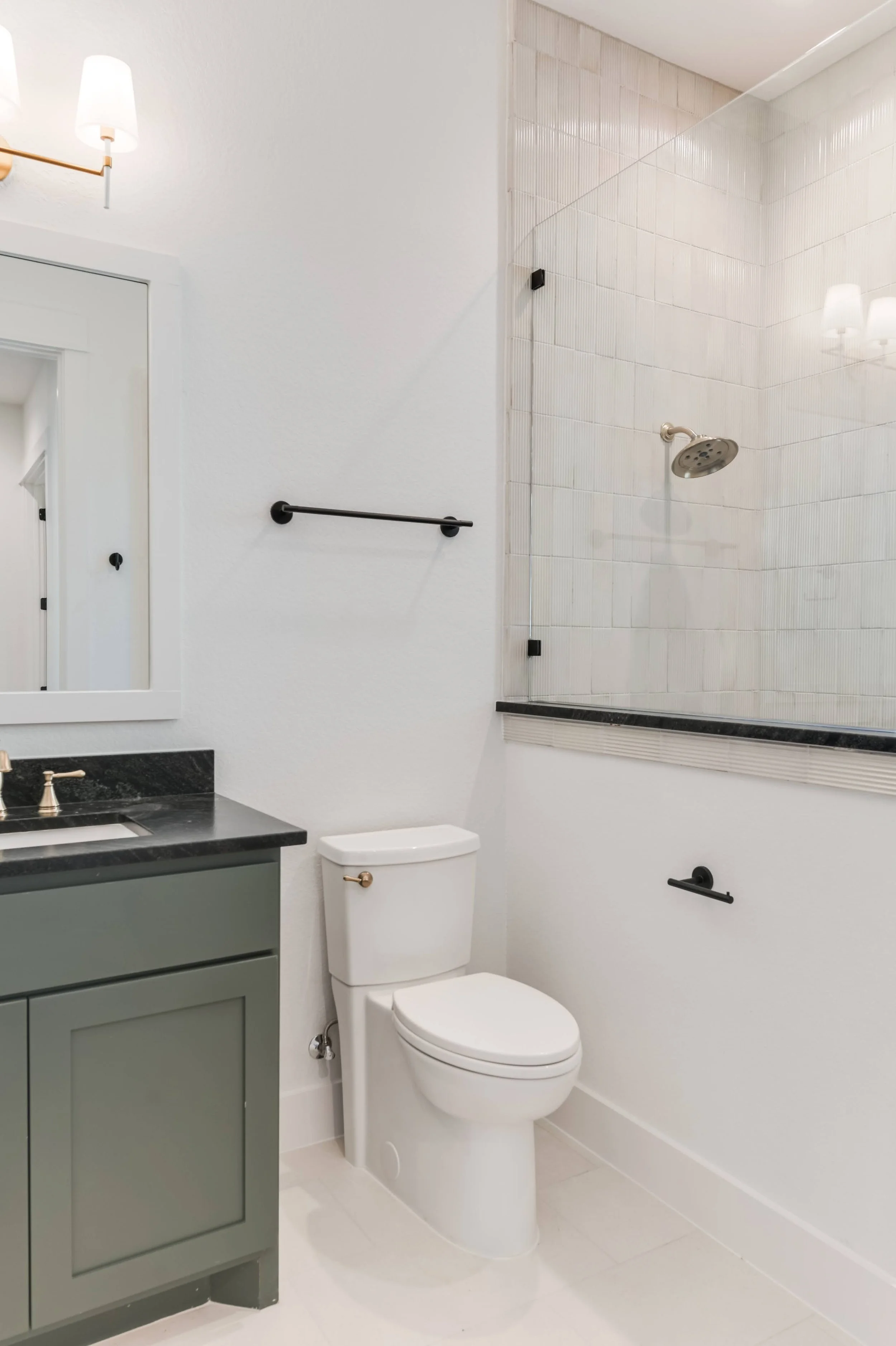
Bathroom I designed for Bennett Design Build in Spring Branch, Texas.
recap
If you’re planning for new lighting in your home, I would recommend:
Calculating the wattage needed for your space using the formula above
Selecting bulbs that are 2700-3000K
Layering natural lighting with a variety of artificial lighting (ambient, task, decorative, etc.)
Installing dimmer switches wherever possible
Using LED lighting
Getting your lighting squared away before selecting final paint colors, if you’re also painting the space
I’ll be honest with you, there’s so much more to think about when it comes to lighting, and it can’t necessarily all be included in one blog post. You also have to think about the direction of your lighting, the scale and style of your fixtures, avoiding glares or harsh shadows, what type of shades you need, highlighting architectural features, and more. However, I hope this blog post helped get the basics down!
Running low on time and facing decision fatigue? I’ve got your back, and I’d be happy to help you. Click the button below to get some help with your home.
If you found this helpful, please share with a friend! Questions about lighting? Drop them in a comment below!